
An Unexpected Inheritance Decision May Deserve a Closer Look
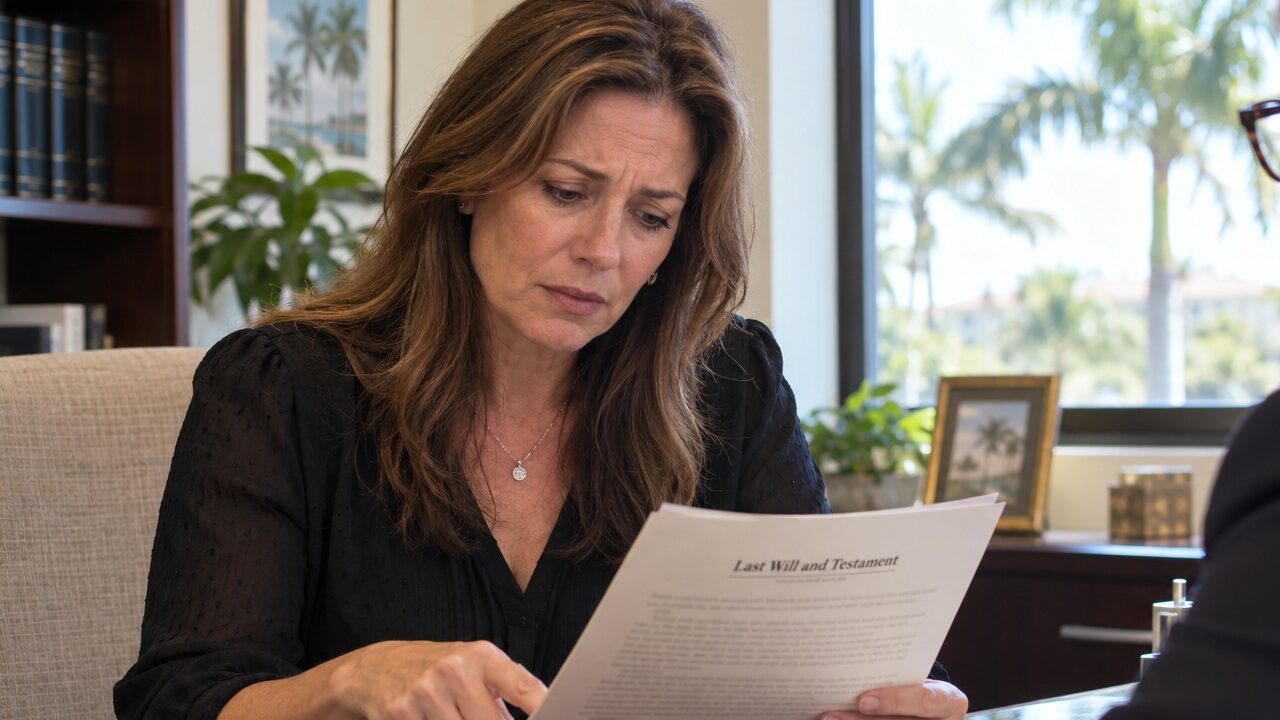
Discovering that a parent left everything to a sibling, new spouse, or caregiver can make an already painful loss even harder. The decision may contradict years of conversations about dividing property equally. In some families, the first indication that anything changed comes when a recently signed will is submitted to probate.
An adult child’s exclusion does not automatically make a Florida will invalid. Parents generally have the right to decide who receives their property, even when their choices disappoint family members. However, that freedom does not protect a will created through undue influence, fraud, or other legally significant problems.
A Boca Raton probate litigation lawyer can examine how the will was prepared, the parent’s condition when it was signed, and the circumstances surrounding the exclusion. For someone questioning a parent’s will, the first priority is identifying whether there are grounds to act before a filing deadline expires.
|
Key Takeaways
|
Can a Parent Legally Disinherit a Child in Florida?
Yes, in most cases. Florida has no rule guaranteeing adult children a share of a parent's estate. A parent can leave everything to one child, a new spouse, a friend, or a charity. Being left out isn't a legal reason to challenge a will on its own. The question is whether the will truly reflects the parent's own decisions.
There are a few narrow exceptions. Florida's homestead rules limit how a parent can leave a primary residence when there's a minor child. A child born or adopted after the will was signed may also be entitled to a share. That rule appears in Section 732.302 of the Florida Statutes. Outside those situations, a challenge has to show the will itself is invalid.
Only an "interested person" can contest a will. In practice, that means someone who would inherit if the current will were thrown out. That might be under an earlier will that left them a share. It might also be under Florida's intestacy rules, which control when there's no valid will at all. A left-out child who wouldn't gain anything either way usually can't sue.
Timing matters here too. Florida doesn't allow anyone to contest a will while the parent is still alive. The challenge has to wait until the will is offered for probate after the death. That's often when families first learn what the will says. By then, the legal clock may already be running.
What Are the Legal Grounds for Contesting a Will in Florida?
Florida courts won't throw out a will simply because it seems unfair. A challenge has to prove at least one recognized legal defect in how the will was made or signed.
- Undue Influence – Someone overpowered the parent's free will and substituted their own wishes, usually through pressure, isolation, or manipulation.
- Lack of Mental Capacity – The parent didn't understand what they owned, who their family members were, or what the will would do when signed.
- Fraud or Duress – The parent was tricked about what they were signing or was threatened or coerced into signing it.
- Improper Signing – Florida requires the parent to sign at the end of the will in front of two witnesses, who must also sign.
- A Later Will or Revocation – A newer will replaced this one, or the parent destroyed or formally revoked it before death.
Proving any of these grounds takes more than suspicion. Medical records, witness testimony, the drafting attorney's file, and financial records all play a role. Much of that evidence sits with the person defending the will. A probate litigation lawyer can use court procedures to obtain it. Acting early helps preserve witnesses and records before they disappear.
When the Sibling Who Cared for a Parent Gets Everything
This is one of the most common and painful will disputes in Florida. The Florida Supreme Court set the rules in In re Estate of Carpenter. Under that decision, a presumption of undue influence can arise. It applies when someone in a close, trusted relationship receives a large share. That person must also have been active in getting the will made. When that presumption applies, the law shifts the burden to the person defending the will.
Courts look at specific actions to decide whether someone was "active" in procuring a will. Those include recommending the lawyer, being present when the parent discussed the will, and knowing its contents in advance. Giving instructions to the lawyer, finding the witnesses, and keeping the will afterward also count. The more of these factors that appear, the stronger the challenge usually becomes.
Caregiving complicates the picture. A Florida appeals court took up caregiving in Estate of Kester v. Rocco. It said help consistent with a "dutiful" adult child doesn't create the presumption. The July/August 2026 issue of the Florida Bar Journal revisited that debate. Its authors argued the "dutiful child" idea isn't a true exception. They said it's a factual question courts must weigh case by case.
That means the outcome often depends on the details. Driving a parent to doctor's appointments is ordinary caregiving. Choosing a new lawyer, sitting in on the meeting, and controlling visitors can look very different. Witness accounts, phone records, and the drafting attorney's notes often show which side of that line a sibling's conduct falls on.
How Long Do You Have to Contest a Will in Florida?
Not long. Under Section 733.212, a person served with a notice of administration generally has three months to object. After that, the objection is forever barred. Florida also sets an outer limit. Objections generally can't be filed after the estate closes or more than one year after the notice is served.
The window can be shorter still. Formal notice served before the court appoints a personal representative can shrink the response time to days. Many parents also leave most of their estate through a revocable trust rather than a will. Under Section 736.0604, a trust challenge can be barred six months after the trustee sends the required notice. That notice must include a copy of the trust.
Each deadline depends on which notice a person received and when. Missing the right one can end a challenge before a court ever looks at the evidence. The table below compares the deadlines that most often decide whether a will or trust challenge can move forward.
| Situation | Deadline | Florida Law |
|---|---|---|
| Served with a notice of administration | Three months after service | Section 733.212 |
| Outer limit for any will objection | Earlier of the personal representative's final discharge or one year after service of the notice | Section 733.212 |
| Served with formal notice before letters of administration issue | Written defenses due 20 days after service, and the will must be challenged in that proceeding | Section 733.2123 and Florida Probate Rule 5.040 |
| Challenging a revocable trust | Earlier of the general limitations period or six months after the trustee's notice | Section 736.0604 |
Evidence That Can Prove a Will Should Be Thrown Out
Will contests are won or lost on evidence. The strongest cases usually combine records with testimony from people who saw the parent regularly.
- Medical and Pharmacy Records – Diagnoses of dementia, memory loss, or heavy medication around the time the will was signed can show the parent lacked capacity.
- Earlier Wills – A long history of equal treatment followed by a sudden change can suggest something outside influenced the parent's decision.
- The Drafting Attorney's File – Notes, emails, and billing records can show who contacted the lawyer, who attended meetings, and who gave instructions.
- Bank and Account Records – Sudden changes in who controlled the parent's money often line up with changes to the will or beneficiaries.
- Witness Testimony – Friends, neighbors, doctors, and caregivers can describe the parent's mental state and who controlled access to them.
Much of this evidence is in the hands of the sibling or relative defending the will. Getting it usually requires subpoenas, depositions, and court orders. A probate litigation lawyer can secure records before they're lost and interview witnesses while memories are fresh. Just as important, a lawyer can file objections well before the deadline.
Protecting Your Place in Your Parent's Legacy
Being cut out of a parent's will can feel like losing that parent a second time. You don't have to accept a will that doesn't reflect what your mother or father truly wanted. At The Levy Firm PLLC, our Boca Raton probate litigation lawyers investigate how the will was made. We gather the evidence and act quickly to protect your right to object.
Attorney Geoff Levy spent years handling complex creditor-rights litigation across Florida before focusing on probate and estate law. He handles every case personally, gives clients his cell phone number, and responds within 24 hours. Contact us today for a free consultation about your parent's will. Se habla español.
"They were extremely helpful with my situation, very knowledgeable, very happy to do business with them." - Anthony H., ⭐⭐⭐⭐⭐